

Is Your Dog Obsessed With the Ball?
- pawsomegrub1
- May 7
- 4 min read
Why Constant “Go-Go-Go” Isn’t Always a Good Thing.
A few years ago, I started learning more about nervous system regulation in dogs, and honestly, it completely changed the way I viewed constant ball play and overstimulation.
Before that, I thought a dog obsessed with the ball was just a happy, active dog.
Pudsey absolutely LOVES his ball. The second it comes out, his entire body changes. He becomes hyper focused, alert, excited, and completely locked in. He will keep going and going if we let him. He taps your foot with the ball, nudges it closer, stares intensely, and struggles to switch off while it’s around.
At one point, he would even walk around constantly carrying the ball in his mouth… sometimes even falling asleep with it still in his mouth.
And while many people laugh and say:“Aw he just loves his ball!”
Sometimes it can actually be a sign a dog is struggling to fully switch off mentally.
There’s a huge difference between healthy play… and a dog getting stuck in a constant state of over-arousal.
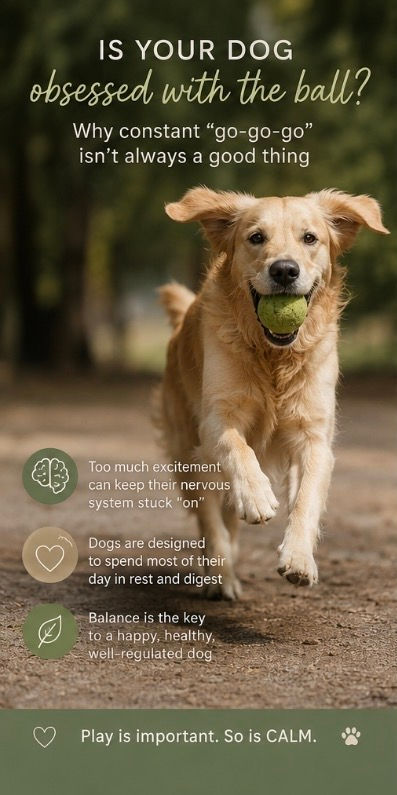
What Is Self-Regulation in Dogs?
Self-regulation is a dog’s ability to calm themselves down and return to a relaxed state after excitement.
A well-regulated dog can:
play and have fun
get excited
run and explore
then naturally settle again afterwards
Dogs are actually designed to spend MOST of their day in a calm “rest and digest” state.
This is the nervous system state where:
digestion works properly
healing happens
hormones regulate
the body repairs itself
the mind feels safe and calm
Short bursts of excitement are completely normal and healthy:
ball play
zoomies
off leash running
training games
beach walks
social play
But the key is returning BACK to calm afterwards.
Some dogs struggle with that transition.
The Problem With Constant Ball Obsession
For some dogs, repetitive high-intensity ball play can become almost addictive.
Every throw creates a rush of:
adrenaline
dopamine
cortisol
Over time, some dogs begin constantly chasing that “high”.
Instead of playing and then relaxing, they stay stuck in a heightened nervous system state.
You might notice:
inability to switch off
pacing
constant panting
whining
obsessive staring
dropping the ball repeatedly at your feet
constantly carrying the ball around
sleeping with the ball in their mouth
inability to settle inside
hyper vigilance
always “on”
barking for stimulation
restlessness even after exercise
Ironically, many of these dogs don’t actually need MORE stimulation.
They need help learning how to decompress.

What I Started Noticing With Pudsey
With Pudsey, I realised:
the ball was keeping him mentally “wired”
he struggled to fully relax while it was visible
removing the ball actually helped him settle
once the game stopped and the ball disappeared, his whole nervous system softened
It was like his brain finally went:“Okay… we can rest now.”
That was a huge eye opener for me.
Dogs Shouldn’t Live in a Constant State of Excitement
Modern dog culture sometimes pushes the idea that dogs constantly need:
stimulation
entertainment
exercise
activity
endless fetch
But many dogs actually become MORE dysregulated the more stimulation they get.
Balance is important.
Healthy dogs should spend most of their day:
sleeping
resting
sniffing
chewing
wandering calmly
relaxing near their family
simply existing peacefully
Not constantly searching for the next adrenaline hit.
Teaching Dogs How To Rest Is Just As Important As Teaching Them How To Play
One thing I think we sometimes forget in modern dog ownership is that dogs need to LEARN how to relax too.
We spend so much time teaching:
sit
stay
recall
fetch
agility
tricks
But many dogs are never actually taught how to switch off.
For some dogs, especially highly driven or working breeds, calmness doesn’t always come naturally in busy modern households.
Sometimes they need support learning:
boredom is okay
rest is safe
they don’t need constant stimulation
they don’t need to be “on” all the time
And honestly, learning to rest can be one of the healthiest life skills we give them.
It’s also important to remember that ball play itself isn’t bad.
Play is healthy.Movement is healthy.Fetch can absolutely be part of a balanced, enriching life.
This is simply about recognising when healthy excitement starts tipping into obsession, hyper-fixation, or chronic overstimulation.
Balance is always the key 🤍

Signs Your Dog May Be Overstimulated
Some subtle signs include:
unable to settle at night
destructive behaviour
constantly demanding play
overreacting to noises/movement
pulling excessively on walks
difficulty resting during the day
intense fixation on toys
frantic energy
always appearing “wired”
Sometimes what looks like “high energy” is actually a dysregulated nervous system.
What Helped Us
Things that have helped Pudsey:
putting the ball completely away after play
scheduled ball sessions instead of constant access
more sniff walks instead of intense fetch
calm enrichment like chewing and licking
encouraging rest after excitement
not constantly hyping him up
allowing boredom sometimes
rewarding calm behaviour
And honestly?
He seems happier for it.
Calm Is Healthy
One of the biggest things I’ve learned is this:
A calm dog is not a bored dog.
A dog that can fully relax and feel safe enough to rest is actually showing a very healthy nervous system.
Excitement has its place.Play has its place.Fetch has its place.
But so does calm.
And many dogs today probably need a little more help learning how to switch off.
Need Help With Your Dog’s Self-Regulation?
If you feel like your dog struggles to switch off, is constantly “on”, overly fixated on toys, anxious, hyper-alert, or unable to fully relax, sometimes an outside perspective can really help.
Every dog is different, and nervous system regulation can be influenced by:
lifestyle
routine
exercise balance
enrichment
diet
sleep
stress levels
breed traits
household environment
Through my animal naturopathy and nutrition studies, I’ve become incredibly passionate about helping owners better understand what’s really going on beneath the behaviour.
We now offer personalised consultations tailored to your individual dog and household.
You can choose between:
email consultations
phone consultations
Zoom consultations
in-person consultations
These can cover:
overstimulation
anxiety
inability to settle
obsessive behaviours
diet and nervous system support
puppy regulation
enrichment balance
senior dog wellbeing
overall holistic support
If you and your dog need help creating more calm and balance, feel free to reach out or book a consultation with us 🤍
Because sometimes the biggest change we can make for our dogs… is helping them finally feel safe enough to truly relax.



Comments